Well, I forgot to post yesterday, which was the 21st anniversary of the first post at Mirror of Justice. (I think I have law students who were born after that first post.) A lot has happened since then (besides 2 papal conclaves, 6 presidential elections, and two Notre Dame losses in the National Championship game). Obviously, we MOJ-ers have not been posting as much here as we did in the past. (I blame Twitter, BlueSky, Substack, etc.) Still, after many thousands of posts and many millions of page views, I believe that it remains important for lawyers, legal scholars, law students, and -- well -- everyone to think about the implications of Christianity for law, legal practice, legal education, and the legal enterprise.
I am working on some revisions, changes, adjustments, re-presentations, etc., for MOJ, so stay tuned. And, for old times' sake, go read our first post, here:
Welcome to Mirror of Justice, a group blog created by a group of Catholic law professors interested in discovering how our Catholic perspective can inform our understanding of the law. Indeed, we ask whether the great wealth of the Catholic intellectual and moral tradition offers a basis for creating a distinctive Catholic legal theory- one distinct from both secular and other religious legal theories. Can Catholic moral theology, Catholic Social Thought and the Catholic natural law tradition offer insights that are both critical and constructive, and which can contribute to the dialogue within both the legal academy and the broader polity? In particular, we ask whether the profoundly counter-cultural elements in Catholicism offer a basis for rethinking the nature of law in our society. The phrase "Mirror of Justice" is one of the traditional appellations of Our Lady, and thus a fitting inspiration for this effort.
A few things about this blog and us:
1. The members of this blog group represent a broad spectrum of Catholic opinion, ranging from the "conservative" to the "liberal", to the extent that those terms make sense in the Catholic context. Some are politically conservative or libertarian, others are on the left politically. Some are highly orthodox on religious matters, some are in a more questioning relationship with the Magisterium on some issues, and with a broad view of the legitimate range of dissent within the Church. Some of us are "Commonweal Catholics"; others read and publish in First Things or Crisis. We are likely to disagree with each other as often as we agree. For more info about us, see the bios linked in the sidebar.
2. We all believe that faith-based discourse is entirely legitimate in the academy and in the public square, and that religious values need not be bracketed in academic or public conversation. We may differ on how such values should be expressed or considered in those conversations or in public decisionmaking.
3. This blog will not focus primarily on the classic constitutional questions of Church and State, although some of our members are interested in those questions and may post on them from time to time. We are more interested in tackiling the larger jurisprudential questions and in discussing how Catholic thought and belief should influence the way we think about corporate law, products liability or capital punishment or any other problem in or area of the law.
4, We are resolutely ecumenical about this blog. We do not want to converse only among ourselves or with other Catholics. We are eager to hear from those of other faith traditions or with no religious beliefs at all. We will post responses (at our editorial discretion, of course.) See "Contact Us" in the sidebar.
5. While this blog will be highly focused on our main topic, we may occasionally blog on other legal/theoretical matters, or on non-legal developments in Catholicism (or on baseball, the other church to which I belong.)
6. We will be linking to relevant papers by the bloggers in the sidebar. Comments welcome!
A report on today's announcement is here. Here's a bit:
“Today, I am commuting the sentences of 37 of the 40 individuals on federal death row to life sentences without the possibility of parole,” Biden announced in a statement released Monday.
Notably, the president did not commute the sentences of three people whose crimes included mass shootings or acts of terrorism: Dzhokhar Tsarnaev, one of two brothers responsible for the deadly Boston Marathon bombing in 2013; Dylann Roof, a White nationalist who massacred nine people at a historically Black church in Charleston, South Carolina, in 2015; and Robert Bowers, who killed 11 worshippers at Pittsburgh’s Tree of Life Synagogue in 2018.
“These commutations are consistent with the moratorium my Administration has imposed on federal executions, in cases other than terrorism and hate-motivated mass murder,” Biden said, referring to his Justice Department’s halt on federal executions.
I would welcome legislation (federal and / or state) that abandoned capital punishment as a sanction. At the same time, I do not believe that capital punishment violates the Constitution (and so judges should not use creative interpretations to bring about abolition) and I also think it is not consistent with the role of the "executive" to, in a blanket way, effectively nullify legislative and electoral choices. It would have been, in my view, better had Pres. Biden, when he was Vice President Biden, used his influence, and large congressional majorities, and political capital, to work for a legislative repeal.
It also seems to me that the reasons the President gives for commuting most of the federal death sentences apply with equal force to the "high profile" ones he is letting stand. If anything, his decision not to commute in the cases where it would be politically controversial to do so is inconsistent with his (correct) concern that political considerations distort the application of capital punishment.
I hope, though, that this news prompts legislative actions in the states, such as this one in my own state of Indiana.
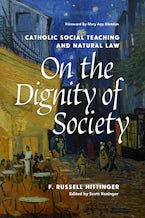
My copy of Russ Hittinger's new book -- which pulls together and synthesizes a lot of his great writing on the Catholic Social Teaching tradition, natural law, social-ontology, political theology, and more -- just arrived. It looks to be a perfect Christmas gift! Get yours ASAP!
On this day, in 1933, the 21st Amendment was ratified, repealing the 18th, which had provided for the prohibition of the "manufacture, sale, or transportation of intoxicating liquors within, the importation thereof into, or the exportation thereof from the United States and all territory subject to the jurisdiction thereof for beverage purposes[.]" For an excellent book about the Prohibition experiment, its history and context, and its (very interesting) legal and constitutional implications and legacy, check out Daniel Okrent's Last Call.
One of the (many) not-done things on my list of "things I'd like to do as a law professor" is a seminar-course, based on Okrent's book, about Prohibition (broadly understood), including its connection to immigration, anti-Catholicism, the rise of federal criminal law, census and districting shenanigans, legal moralism, etc. Someday . . .
In my experience, homilists in Catholic parishes don't know quite what to do with the Feast of Christ the King, which is today. Usually, the day's "message" or "theme" has been (again, in my experience) something to the effect that we should ask if we are "putting Jesus first in our lives/hearts" (and, certainly, we should).
And yet . . . especially in light of the emerging (and much needed) focus in the Church on religious liberty and the realities of both aggressive secularism and persecution, it's worth (re-)reading Quas Primas, the encyclical of Pope Pius XI that instituted the feast day in 1925, and remembering that this institution's purpose sounded more in political theology than in personal piety and devotion. This feast is a reminder that government is not all, that there are things which are not Caesar's, and that everything, in the end, is "under God."
James Schuls (Missouri) has a fascinating piece in the latest Journal of School Choice called "The Father of the School Choice Movement", about Fr. Virgil Blum. I am more than a little bit sheepish about the fact that I'd never heard of Fr. Blum! Here is the abstract:
Milton Friedman is widely considered the intellectual father of the school choice movement. While Friedman deserves much credit, Father Virgil Blum stands out as an influential figure in the nascent school choice movement. Using archival research, this paper examines Blum’s contributions to the movement. From his 1954 doctoral dissertation, which made the legal case for funding religious schools, to his 1958 book, Freedom of Choice in Education, and his decades-long career as a professor, Blum was a tireless advocate for educational freedom. While Friedman made the market argument, Blum made the legal, moral, and religious freedom arguments for school choice.
Well, it's Russ Hittinger on Catholic Social Thought so, "self-recommending" but . . . if you are in or near Chicago on November 7, don't miss this event at the Lumen Christi Institute:
Russell Hittinger has long been one of the world's leading scholars of Catholic social teaching and natural law theory. His most recent book, On the Dignity of Society, presents the fruit of his mature thinking on fundamental issues in Catholic political thought. Rooted in Thomistic philosophy and natural law theory, but also animated by his study of St. Augustine and thus sensitive to historical contexts and arenas for moral and theological disputation, Hittinger articulates the deepest principles of the Church's social teaching and sheds considerable light on their historical applications. At this event, Profs. Mary Hirschfeld and R. H. Helmholz will discuss Hittinger's latest work, and the event will conclude with a response from Prof. Hittinger.
Out of a federal district court in North Dakota, courtesy of Judge Daniel Traynor, here Download Gov.uscourts.ndd.65135.31.0is an excellent opinion, granting a motion for a preliminary injunction filed by the Catholic Benefits Association (represented by the great Martin Nussbaum and his team) in a case involving (yet) another administrative/executive effort to limit religious freedom. I particularly enjoyed this footnote:
"Unchecked government power creates martyrs like Dietrich Bonhoeffer, imprisoned and executed for expressing opposition to euthanasia and the persecution of Jews; Miguel Pro, arrested and eventually executed for violation of Mexico’s anti-Catholic Calles Law; and Thomas More, famous for being executed by the British king for the crime of not saying anything."
Along with my colleague, Prof. Stephanie Barclay (Georgetown), I have a short essay up at City Journal, explaining why Indiana's religious-freedom protections do not require exemptions from that state's abortion regulations. Here's a bit:
In Dobbs v. Jackson Women’s Health Organization (2022), the U.S. Supreme Court abandoned its mistaken rulings in Roe v. Wade (1973) and Planned Parenthood v. Casey (1992), affirming that American political communities are constitutionally permitted to regulate abortion. Soon after Dobbs, Indiana enacted Senate Enrolled Act No. 1 (what we call the “abortion law”), which prohibits abortion except when a pregnancy seriously endangers a mother’s health or life, a pregnancy is the result of rape or incest, or the unborn child has a “lethal . . . anomaly.”
Several claimants challenged the abortion law as a violation of Indiana’s Religious Freedom Restoration Act. They argued, in other words, that because the abortion law imposes a substantial burden on their religious exercise, rooted in the sincerely held religious belief that abortions are sometimes not only permissible but required, they are entitled to an exemption from the law. A number of legal commentators have advanced similar arguments. And in the spring of 2024, an Indiana appeals court agreed, for the most part, with the challengers’ claims. While acknowledging that the federal and state constitutions permit Indiana to regulate abortion, the court concluded that the challengers were likely to succeed with their claim that the state cannot justify enforcing the abortion law in cases where such enforcement burdens religious exercise.
The court of appeals was wrong, though, and Indiana’s supreme court should reject its reasoning (as we have argued in an amicus brief). Indiana, quite appropriately, protects the fundamental right to religious freedom. That right, however, does not entitle the claimants to an exemption from the state’s duly enacted and constitutionally permissible abortion law.
Like many, I was . . . underwhelmed by the Opening Ceremonies for the recent Olympic Games in Paris (although, as a longtime heavy-metal fan, I liked Gojira's rendition of "Ah! Ça Ira”, notwithstanding the song's connection with the French Terror). And, I was similarly unimpressed by the gaslighting engaged in by the many commentators (including Catholics who should know better) who played the "ackshully" card with respect to the irreverent depiction of the Last Supper.
As it happened, I was listening to the the multipart podcast series, by the (excellent) "Rest Is History" team, on the lead-up to the Revolution, which included an entire episode on the extent to which Marie Antoinette became, largely without justification, and in no small part because of the republicans' misogyny and nativism, an object of public odium. Then, to see the (bizarre) decision by the French organizers of the Games to celebrate her murder-by-mob (and, by extension, the general enterprise of Killing-for-Year-Zero) . . . it was quite a thing. And, this essay, by Joseph Toates, is a very interesting reflection on that decision:
The execution of Marie Antoinette and the treatment of her family is nothing for France to be proud of. Her punishment is the first evidence of a revolution run amok. The spirit of her trial was public vengeance and it can barely be considered a legal proceeding. Her child, age seven, was forced to testify under duress and in prison to incestuous rape by his mother. The effort put forth to bring this particular charge against Marie shows that the trial was not solely about her conduct of affairs of state, but rather about humiliating her publicly. Marie refused to answer the charge in the courtroom, saying it was beneath her dignity as a mother. Killing Marie was not an act of justice. It was extrajudicial public revenge and an act worthy of, if not outright condemnation, then at least very careful reconsideration. The imprisonment and death of her son is a clear example of cruelty and abuse to an innocent child for the sake of convenience and as an act of family retribution.
There is, I'm confident, a connection between the themes/aims of this blog -- i.e., between "Catholic Legal Theory" -- and both (a) Toates's (and many others') reminders of the (very) dark side of the French Revolution and (b) his reflections about the way political/legal regimes choose to (mis)represent their pasts.